What We've Learned About Nutrition While Raising German Shepherd Dogs
Explore the nutrition principles we've learned while raising German Shepherd Dogs, including dietary variety, whole foods, fresh food additions, joint-support foods, digestive support, and safe food preparation practices.
NUTRITION & FEEDING
Citrus Grove Resources
6/14/20265 min read

What We've Learned About Nutrition While Raising German Shepherd Dogs
Nutrition is one of the topics we are asked about most often.
Over the years, we've spent countless hours reading books, listening to veterinarians, following canine nutritionists, studying research, and experimenting with different feeding approaches for our own dogs.
We've explored kibble, fresh foods, supplements, homemade meals, raw-feeding principles, and holistic nutrition concepts. Like many dog owners, we're continually learning and adapting as new information becomes available.
One thing we've learned is that there is rarely a single "perfect" way to feed every dog.
Every dog is an individual.
Some dogs thrive on commercial diets. Others benefit from additional fresh foods, supplements, or dietary adjustments. Age, activity level, environment, genetics, health history, and individual sensitivities all play a role.
The Basics of Canine Nutrition
While feeding philosophies may differ, most balanced canine diets are built around a few key nutritional components.
Protein
Protein supports muscle development, tissue repair, immune function, and countless other processes throughout the body. It is especially important for growing puppies and active adult dogs.
Common protein sources include:
Beef
Chicken
Turkey
Pork
Lamb
Duck
Rabbit
Fish
Eggs
Healthy Fats
Fats provide energy and help support healthy skin, coat quality, and overall cellular function.
Common sources include:
Fish Oil
Whole Fish
Flax Seeds
Hemp Seeds
Chia Seeds
Carbohydrates
Although dogs do not require carbohydrates in the same way they require protein and fat, many dogs utilize carbohydrates as an excellent energy source.
Examples include:
Oats
Rice
Sweet Potatoes
Pumpkin
Vitamins & Minerals
Vitamins and minerals support bone health, metabolism, immune function, and overall wellness. These nutrients come from a variety of foods, including vegetables, fruits, organ meats, fish, and supplements when appropriate.
The Importance of Variety
One concept that appears repeatedly across many nutritional philosophies is the value of variety.
Different foods provide different nutrients.
Rotating proteins, fruits, vegetables, and healthy additions can help expose dogs to a wider range of naturally occurring vitamins, minerals, antioxidants, and beneficial compounds.
Just as humans benefit from eating a variety of foods, many owners find that dogs thrive when their diets include a variety of ingredients rather than relying on the same foods every day
Proteins
Beef
Chicken
Turkey
Pork
Lamb
Duck
Rabbit
Fish
Organ Meats
Liver
Kidney
Spleen
Heart
Seeds & Healthy Additions
Chia Seeds
Hemp Seeds
Pumpkin Seeds
Flax Seeds
When introducing new foods, we recommend doing so gradually and in moderation so you can monitor how your dog responds.
Foods Often Used to Support Wellness
Many owners choose to incorporate foods and supplements that are traditionally used to support specific aspects of health.
Joint Support
German Shepherds are an athletic breed, so we pay close attention to joint health.
Foods and supplements commonly used by owners include:
Bone Broth
Fish Oil
Green Lipped Mussels
Turmeric
Blueberries
Seasonal Allergies
Some owners explore:
Raw Honey
Bee Pollen
Fish Oil
Spirulina
Quercetin
Preparing Foods Safely
If you're feeding fresh foods, preparation matters.
Some commonly recommended practices include:
Lightly steaming or pureeing vegetables to improve digestibility.
Grinding seeds when appropriate.
Introducing new foods gradually.
Washing produce thoroughly.
Researching foods carefully before feeding.
Storing perishable foods properly.
Avoiding foods known to be toxic to dogs.
Common foods to avoid include chocolate, grapes, raisins, onions, garlic, and foods containing xylitol.
Vegetables
Broccoli
Green Beans
Carrots
Spinach
Kale
Celery
Cucumbers
Bell Peppers
Fruits
Blueberries
Strawberries
Apples
Blackberries
Pears
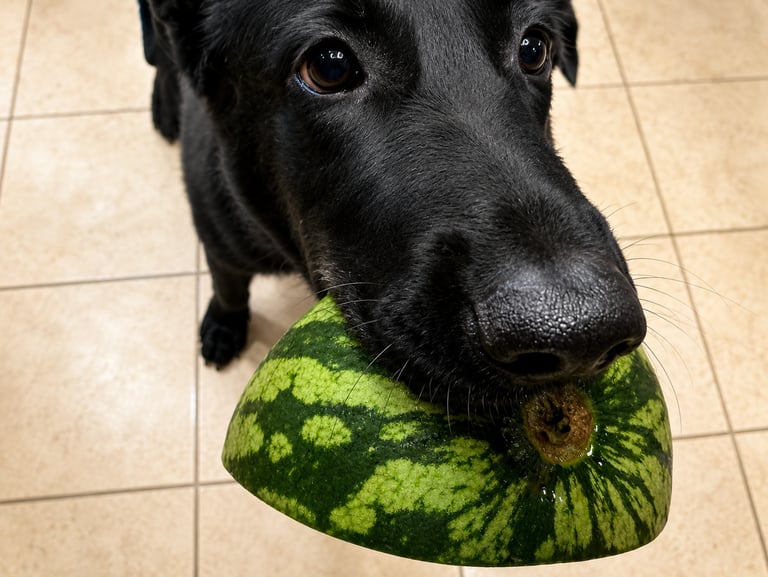
Watermelon
Bananas
Digestive Support
Common additions include:
Pumpkin
Kefir
Plain Yogurt
Raw Goat Milk
Bone Broth
Raw Feeding Reference Guide
While Citrus Grove German Shepherd Dogs does not feed a strict raw diet, many owners find raw feeding principles helpful when evaluating balanced canine nutrition.
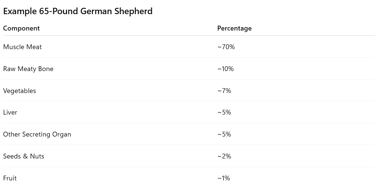
The chart below provides an example of daily food amounts commonly used for moderately active adult dogs.
Example Raw Feeding Ratios
Many raw feeding programs use ratios similar to:
70% Muscle Meat
10% Raw Meaty Bone
7% Vegetables
5% Liver
5% Other Secreting Organ
2% Seeds & Nuts
1% Fruit
For a 70-pound dog eating approximately 29 ounces per day, this would equal:
Muscle Meat: 20 oz
Raw Bone: 3 oz
Vegetables: 2 oz
Liver: 1.5 oz
Other Organ: 1.5 oz
Seeds & Nuts: 0.5 oz
Fruit: 0.3 oz
Supplements
Some raw feeding programs also incorporate supplements such as:
Fish oil
Vitamin E
Kelp powder
These are often adjusted based on the dog's weight and the foods
being fed.


Understanding Raw Feeding Ratios for Puppies
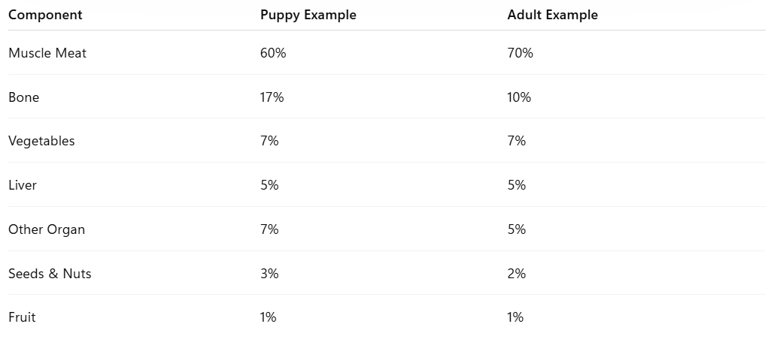
Growing puppies have different nutritional needs than adult dogs. Because they are developing rapidly, many raw feeding programs use different ratios during the first year of life.
The example below reflects one commonly used raw-feeding approach for medium- to large-breed puppies.
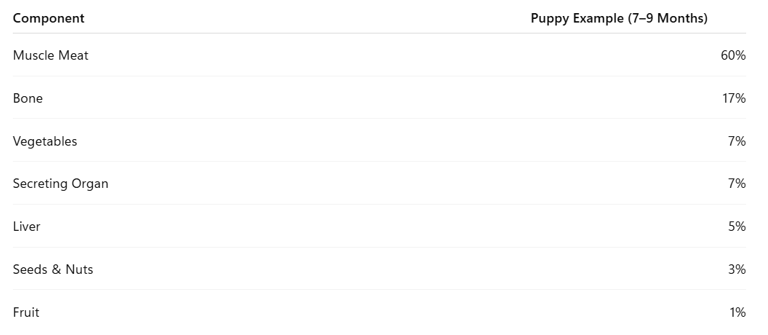
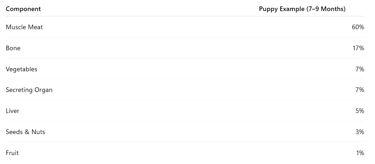
Example Puppy Raw Feeding Ratios
60% Muscle Meat
17% Raw Meaty Bone
7% Vegetables
7% Secreting Organ
5% Liver
3% Seeds & Nuts
1% Fruit
Why Are Puppy Ratios Different?
Puppies require additional nutrients to support healthy growth and development. Many raw feeding programs increase bone and organ percentages during the growing months to support the development of skeletal structures.
As puppies mature, feeding ratios often shift toward adult maintenance levels.
Example Feeding Amounts
The exact amount a puppy should eat depends on:
Age
Current weight
Growth rate
Activity level
Body condition
Breed size
Large-breed puppies, such as German Shepherd Dogs, should be monitored carefully throughout their growth to help maintain a lean body condition and avoid excessive weight gain.
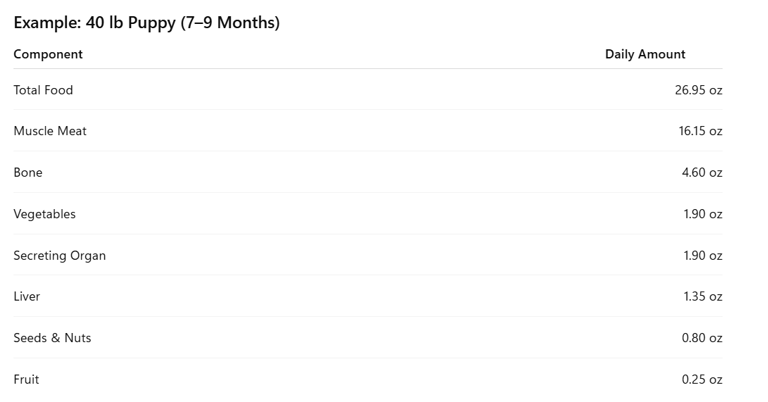
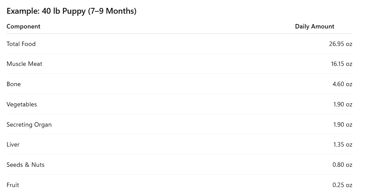
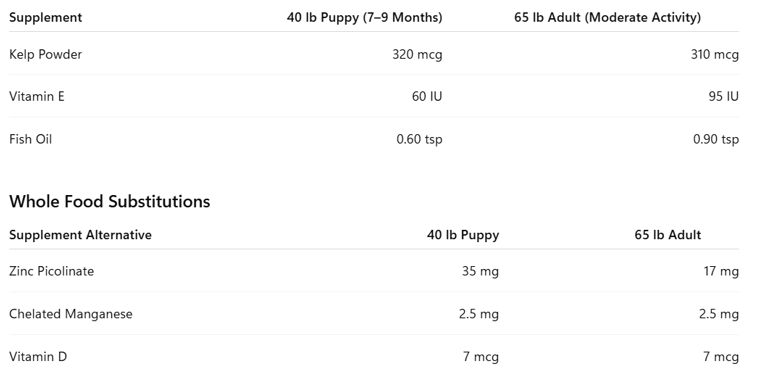
These amounts were derived from one canine nutrition calculator and are provided for educational purposes only. Supplement needs vary depending on diet, age, activity level, health status, and individual dog. Owners should consult with their veterinarian or a qualified canine nutrition professional before adding supplements to their dog's diet.
Our Perspective
At Citrus Grove German Shepherd Dogs, we do not believe there is a single perfect way to feed every dog. While we do not feed a strict raw diet, we appreciate many of the nutritional principles behind balanced whole-food feeding and have found them valuable in our own learning journey. We encourage owners to explore different feeding approaches, work closely with their veterinarian, and choose the diet that best supports their dog's age, activity level, health, and individual needs.
Additional Learning
Some of the nutritional concepts discussed in this article were inspired by educational materials from canine nutrition professionals, including Kayla Kowalski. Citrus Grove German Shepherd Dogs is not affiliated with or endorsed by these individuals.
Our Approach
At Citrus Grove German Shepherd Dogs, we focus on balance rather than perfection.
We don't claim to have all the answers, and we're always learning. Our goal is simply to provide our dogs with quality nutrition, appropriate exercise, veterinary care, and a healthy environment where they can thrive.
We encourage every owner to do their own research, work with trusted veterinary professionals, and choose a feeding approach that fits both their dog's needs and their family's lifestyle.
Disclaimer
This article is intended for educational purposes only and should not be considered veterinary advice. Always consult your veterinarian before making significant changes to your dog's diet.