Understanding Cooling, Warming, and Neutral Foods for Dogs
Explore a holistic approach to canine nutrition through the lens of Traditional Chinese Veterinary Food Therapy (TCVM). This resource discusses foods commonly classified as cooling, warming, or neutral and how some holistic veterinarians use these concepts when considering diet choices for dogs. This information is shared for educational purposes only and is not intended to replace veterinary advice. Always consult your veterinarian before making significant changes to your dog's diet.
NUTRITION & FEEDING
Citrus Grove Resources
5/8/20246 min read
Quickly Jump to the specific food section by clicking on the picture below:
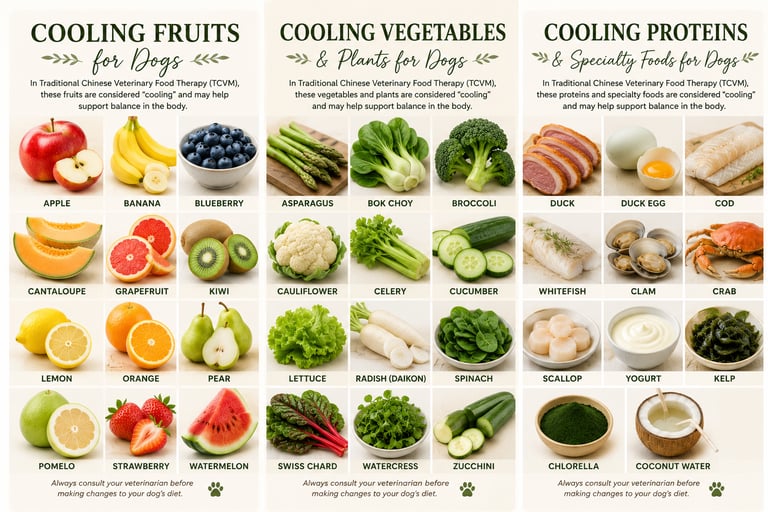
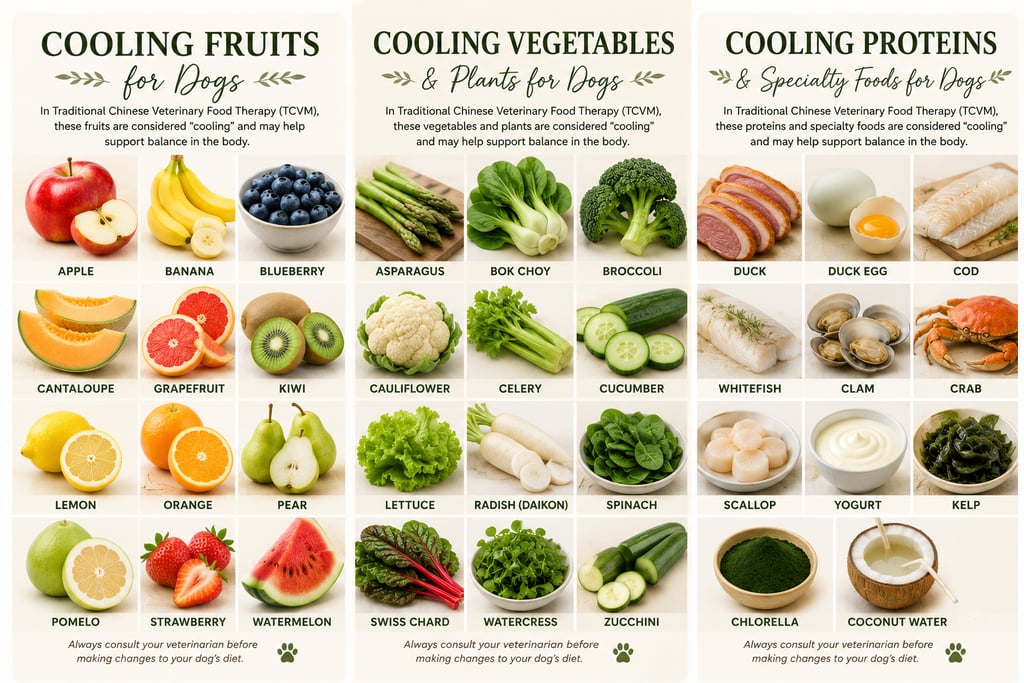
The graphic above highlights many foods traditionally categorized as cooling. While these foods may offer nutritional benefits, every dog is unique. What works well for one dog may not be appropriate for another.
We believe nutrition is just one part of supporting a healthy, balanced dog. Proper exercise, mental stimulation, quality veterinary care, and a loving home all play important roles in helping dogs thrive.
This article is based on educational materials from an integrative veterinary source and is shared to help dog owners learn about Traditional Chinese Veterinary Food Therapy (TCVM). Food classifications such as cooling, warming, and neutral are part of a holistic framework used by some veterinarians and should not be interpreted as medical advice or a substitute for professional veterinary care.
Cooling Foods for Dogs: A Holistic Perspective
At Citrus Grove German Shepherd Dogs, we enjoy learning about many different approaches to canine health and nutrition. One area that has interested us is Traditional Chinese Veterinary Food Therapy (TCVM), which classifies foods according to their energetic properties rather than simply their nutritional content.
In this system, foods may be considered cooling, warming, or neutral. These classifications do not refer to the actual temperature of the food. Instead, they describe how a food is believed to affect balance within the body.
Some holistic veterinarians may recommend cooling foods for dogs that tend to run warm, experience seasonal discomfort, or struggle with certain inflammatory conditions. Others may use warming foods for dogs who need additional support during colder months or periods of recovery.
Examples of foods commonly classified as cooling include:
What Does "Cooling" Mean?
According to TCVM principles, cooling foods are traditionally used to help support balance in dogs that may exhibit signs associated with excess heat. Some holistic veterinarians incorporate these concepts when developing nutrition plans for individual dogs.
Cooling Greens, Sea Veggies & Plants
Alfalfa Sprouts
Amaranth
Blue-Green Algae
Chlorella
Cilantro
Green Tea
Kelp
Peppermint
Seaweed
Chrysanthemum Tea
Cooling Grains, Seeds & Legumes
Barley
Buckwheat
Millet
Mung Bean
Soy Bean
Wheat Bran
Whole Wheat
Cooling Fruits
Apple
Banana
Blueberry
Cantaloupe
Grapefruit
Kiwi
Lemon
Mulberry
Orange
Pear
Pomelo
Star Fruit
Strawberry
Watermelon
Winter Melon
Other Cooling Foods
Coconut Water
Salt
Sesame Oil
Soy Sauce
Winter Melon
Cooling Dairy & Eggs
Cheese
Chicken Egg
Duck Egg
Cream
Yogurt
Cooling Seafood
Clam
Cod
Crab
Scallop
Whitefish
Cooling Meats & Proteins
Duck
Frog
Rabbit
Tofu
Cooling Vegetables
Asparagus
Bamboo Shoots
Bitter Gourd
Bok Choy
Broccoli
Cauliflower
Celery
Chinese Radish (Daikon)
Cucumber
Eggplant (Aubergine)
Lettuce
Lotus Root
Mushroom
Spinach
Swiss Chard
Tomato
Turnips
Water Chestnut
Watercress
Zucchini
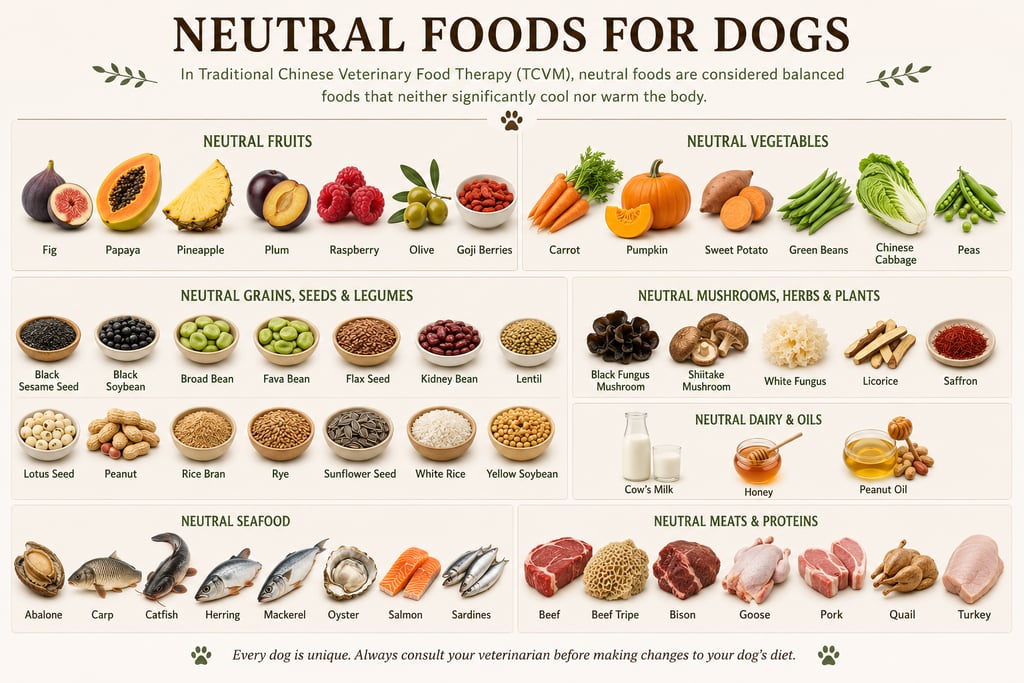
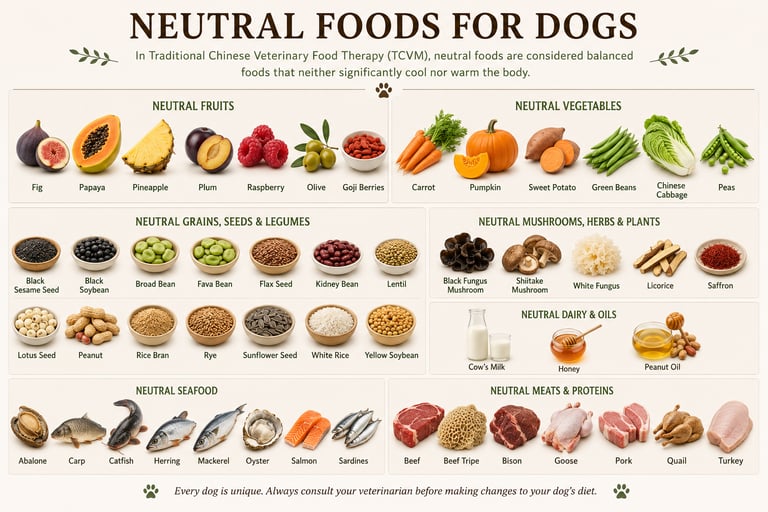
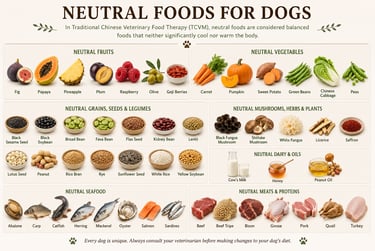
The graphic above highlights many foods traditionally categorized as neutral. While these foods may offer nutritional benefits, every dog is unique. What works well for one dog may not be appropriate for another.
We believe nutrition is just one part of supporting a healthy, balanced dog. Proper exercise, mental stimulation, quality veterinary care, and a loving home all play important roles in helping dogs thrive.
Neutral Foods for Dogs: A Holistic Perspective
In Traditional Chinese Veterinary Food Therapy (TCVM), neutral foods are considered balanced foods that neither significantly cool nor warm the body. Many holistic veterinarians view these foods as excellent everyday dietary staples because they are thought to support overall balance and wellness.
Below is a collection of foods traditionally classified as neutral.
What Does "Neutral" Mean?
According to TCVM principles, neutral foods are believed to provide nourishment without strongly influencing the body's energetic balance. Because of this, many neutral foods are often considered suitable as regular components of a balanced diet.
Many of these foods are familiar ingredients found in commercial dog foods and home-prepared meals. They may provide a useful starting point for owners interested in learning more about holistic nutrition.
Neutral Dairy & Oils
Cow's Milk
Honey
Peanut Oil
Neutral Seafood
Abalone
Carp
Catfish
Herring
Mackerel
Oyster
Salmon
Sardines
Tuna
Neutral Meats & Proteins
Beef
Beef Tripe
Bison
Goose
Pork
Quail
Turkey
Neutral Fruits
Fig
Goji Berries
Olive
Papaya
Pineapple
Plum
Raspberry
Neutral Vegetables
Beet
Carrot
Chinese Cabbage
Green Bean
Kohlrabi
Peas
Potato
Pumpkin
String Bean
Sweet Potato
Taro
Turnip
Neutral Mushrooms,
Herbs & Specialty Plants
Black Fungus Mushroom
Shiitake Mushroom
White Fungus
Licorice
Saffron
Neutral Grains,
Seeds & Legumes
Black Sesame Seed
Black Soybean
Broad Bean
Fava Bean
Flax Seed
Kidney Bean
Lentil
Lotus Seed
Peanut
Rice Bran
Rye
Sunflower Seed
White Rice
Yellow Soybean
Bamboo Shoots
Bitter Gourd
Bok Choy
Broccoli
Cauliflower
Celery
Chinese Radish (Daikon)
Cucumber
Eggplant (Aubergine)
Lettuce
Lotus Root
Mushroom
Spinach
Swiss Chard
Tomato
Turnips
Water Chestnut
Watercress
Zucchini
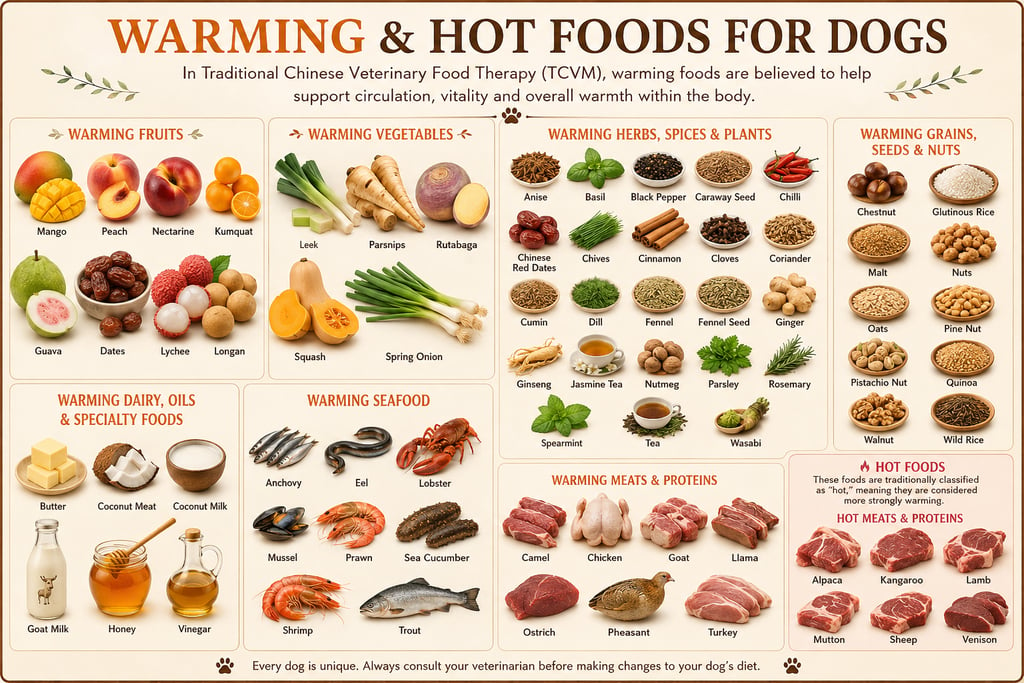
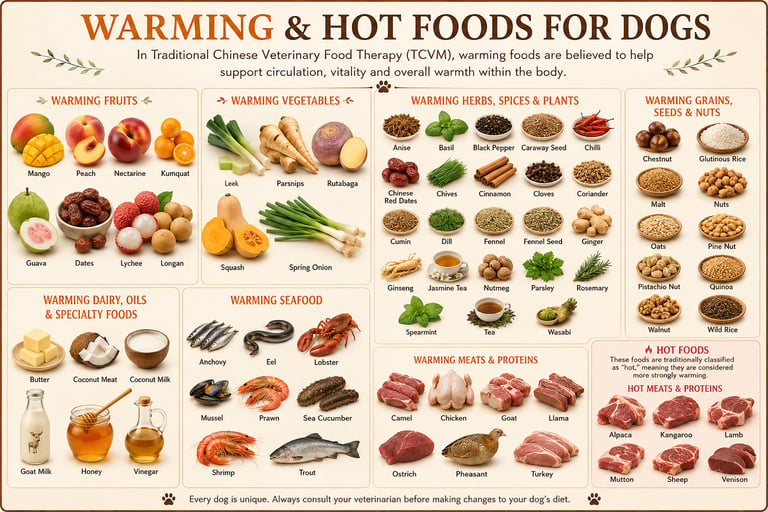
The graphic above highlights many foods traditionally categorized as warm or hot. While these foods may offer nutritional benefits, every dog is unique. What works well for one dog may not be appropriate for another.
We believe nutrition is just one part of supporting a healthy, balanced dog. Proper exercise, mental stimulation, quality veterinary care, and a loving home all play important roles in helping dogs thrive.
Hot Meats & Proteins for Dogs: A Holistic Perspective
Some foods are traditionally classified as "hot," meaning they are considered more strongly warming than standard warming foods.
Hot Meats & Proteins
Alpaca
Kangaroo
Lamb
Mutton
Sheep
Venison
What Do "Warming" and "Hot" Mean?
According to TCVM principles, warming foods are traditionally used to support dogs that may benefit from additional warmth and energy balance. Hot foods are considered even more warming and are generally used more selectively.
Many of these foods are common ingredients found in home-prepared diets, treats, and commercial dog foods. As with cooling and neutral foods, individual needs vary greatly between dogs.
Warming Grains, Seeds & Nuts
Chestnut
Glutinous Rice
Malt
Nuts
Oats
Pine Nut
Pistachio Nut
Quinoa
Walnut
Wild Rice
Warming Dairy, Oils & Specialty Foods
Butter
Coconut Meat
Coconut Milk
Goat Milk
Honey
Vinegar
Warming Seafood
Anchovy
Eel
Lobster
Mussel
Prawn
Sea Cucumber
Shrimp
Trout
Warming Fruits
Dates (and most dried fruits)
Guava
Hawthorn Fruit
Kumquat
Longan
Lychee
Mango
Nectarine
Peach
Warming Vegetables
Leek
Parsnips
Rutabaga
Squash
Spring Onion
Warming Meats & Proteins
Camel
Chicken
Goat
Llama
Ostrich
Pheasant
Turkey
Warming Herbs, Spices & Plants
Anise
Basil
Black Pepper
Caraway Seed
Chilli
Chinese Red Dates
Chives
Cinnamon
Cloves
Coriander
Cumin
Dill
Fennel
Fennel Seed
Ginger
Ginseng
Jasmine Tea
Nutmeg
Parsley
Rosemary
Spearmint
Tea
Wasabi
Warming Foods for Dogs: A Holistic Perspective
In Traditional Chinese Veterinary Food Therapy (TCVM), warming foods are believed to help support circulation, vitality, and overall warmth within the body. These classifications do not refer to the actual temperature of the food but rather the energetic effect the food is thought to have on the body.
Below is a collection of foods traditionally classified as warming.
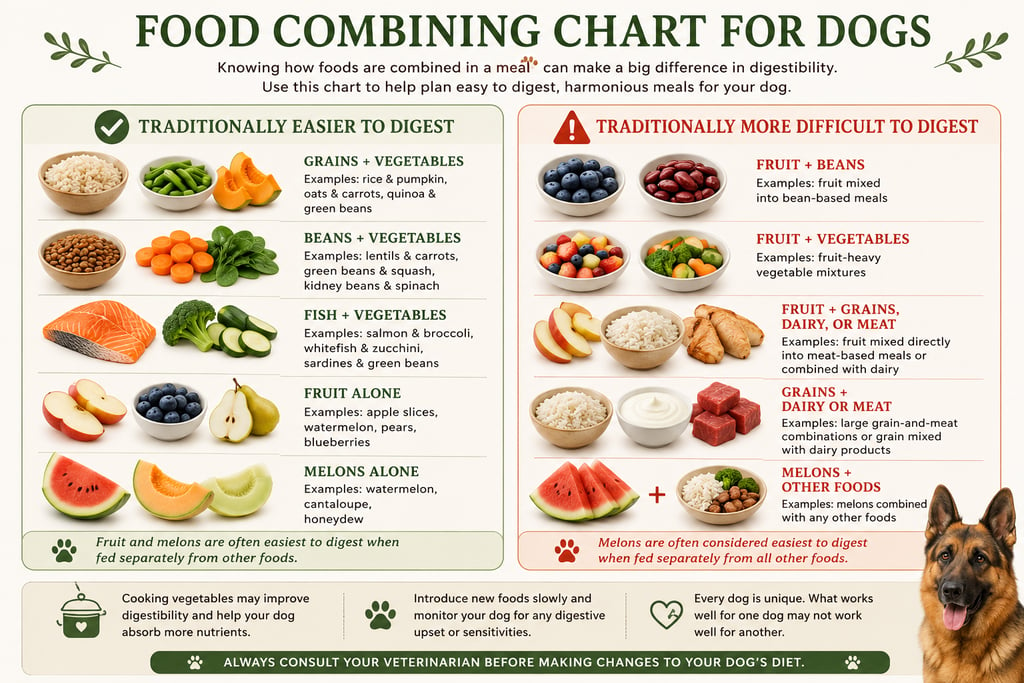
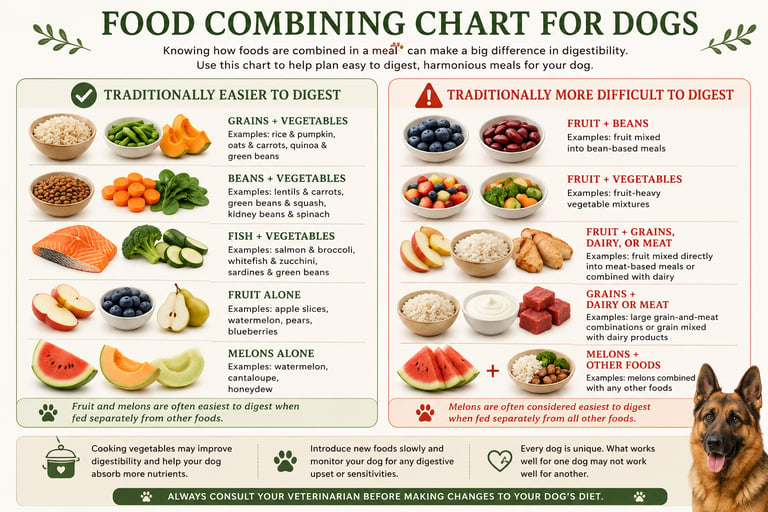
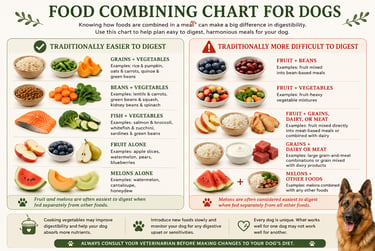
The graphic above summarizes traditional food-combining principles used by some holistic nutrition practitioners to help support healthy digestion and meal planning.
We believe nutrition is just one part of supporting a healthy, balanced dog. Proper exercise, mental stimulation, quality veterinary care, and a loving home all play important roles in helping dogs thrive.
Additional Notes
Some holistic veterinarians recommend lightly cooking vegetables before feeding. Cooking may improve digestibility and can make certain nutrients easier for dogs to access.
When introducing new foods, start slowly and monitor your dog for any digestive upset, sensitivities, or allergies.
Every dog is unique. What works well for one dog may not work well for another.
Grains with Vegetables
Examples:
Rice and pumpkin
Oats and carrots
Quinoa and green beans
Beans with Vegetables
Examples:
Lentils and carrots
Green beans and squash
Kidney beans and spinach
Fish with Vegetables
Examples:
Salmon and broccoli
Whitefish and zucchini
Sardines and green beans
Pheasant
Turkey
Fruit Fed Separately
Some holistic practitioners recommend offering fruit as its own snack rather than combining it with larger meals.
Examples:
Apple slices
Watermelon
Pears
Blueberries
Melons Fed Alone
Melons are often considered the easiest to digest when offered separately from other foods.
Examples:
Watermelon
Cantaloupe
Honeydew
Combinations Traditionally Considered More Difficult to Digest
According to food-combining principles, the following combinations may be more challenging for some individuals:
Fruit with Beans
Examples:
Fruit mixed into bean-based meals
Fruit with Vegetables
Examples:
Fruit-heavy vegetable mixtures
Fruit with Grains, Dairy, or Meat
Examples:
Fruit mixed directly into meat-based meals
Fruit combined with dairy products
Grains with Dairy or Meat
Examples:
Large grain-and-meat combinations.
Grain mixed with dairy products.
Melons with Other Foods
Many food-combining systems recommend serving melons separately from all other foods.
Food Combining for Dogs: A Holistic Perspective
In addition to classifying foods as cooling, neutral, or warming, some holistic nutrition philosophies also consider how foods are combined within a meal.
The concept behind food combining is that certain combinations may be easier to digest together, while others may place additional demands on the digestive system. Although not universally accepted within veterinary nutrition, some holistic practitioners use these principles when designing diets for dogs with sensitive stomachs or digestive concerns.
Traditionally Considered Easier to Digest
The following combinations are commonly recommended within holistic food-combining approaches:
As always, every dog is an individual. Age, activity level, health status, allergies, sensitivities, and veterinary guidance should all be considered when making dietary decisions.
It's important to remember that every dog is unique. A food that benefits one dog may not be appropriate for another. Nutrition should always be considered alongside your dog's age, activity level, medical history, and your veterinarian's guidance.
At Citrus Grove German Shepherd Dogs, we enjoy exploring different approaches to canine wellness and sharing educational resources that help owners make informed choices for their dogs.
We have checked the list against the current list of poisonous foods for dogs, but we HIGHLY encourage you to check yourself before feeding anything you are even slightly unsure about.
https://www.aspca.org/pet-care/animal-poison-control
At Citrus Grove German Shepherd Dogs, we enjoy learning about a variety of approaches to canine wellness and sharing educational resources that may help owners make informed decisions for their dogs.